

Professional Background & References
This portfolio presents selected examples of professional music engraving work created for composers, performers, educators, and music publishers. The projects include contemporary scores, editorial engravings, and performance-ready materials prepared for both print and digital use.
The examples are based on several decades of experience in music engraving and publication design. Much of this work was carried out in professional publishing environments. Together, the materials illustrate a consistent working methodology, a professional approach, and clearly defined quality standards.
Each example places a strong emphasis on clarity and readability. At the same time, it respects the composer’s musical intent. All work follows established engraving standards and modern notation practice.
My work focuses on the preparation of scores for composers, educators, performers, and music publishers. The goal is not visual “embellishment.” Instead, the priority is playability, clear musical communication, and publisher-grade presentation.
In my daily workflow, I use Dorico, Sibelius, and Finale notation software. The choice of tools depends on the specific nature of each project. It is also influenced by the technical environment and the intended use of the final material. When required, the engraving process is supported by Adobe InDesign, Photoshop, and Illustrator. This is especially relevant for projects with more complex graphical or typographical demands.
A significant part of my professional experience comes from music publishing environments. I regularly prepare print-ready full scores and instrumental parts. The score excerpts shown in this portfolio reflect these workflows and are presented exclusively for professional reference.
How I Work
For me, music engraving is not merely a matter of layout or formatting; rather, it is about the clear and reliable transmission of musical information to the performer. Accordingly, playability is always my primary concern, while graphic solutions are shaped by the musical content and adapted to the specific performance context. Within a publishing environment, my work is guided by the consistent application of established standards as well as production requirements.
In this context, I treat software as a tool, not as an end in itself: the specific task always determines the workflow. Beginning with a manuscript, the goal remains consistent—to create a clear and reliable score that functions effectively both in rehearsal and in performance.
Visual Examples
Kéziratból kiadói minőség
Szokolay Sándor: PARAINÉSIS – Féltő látomások (1967)

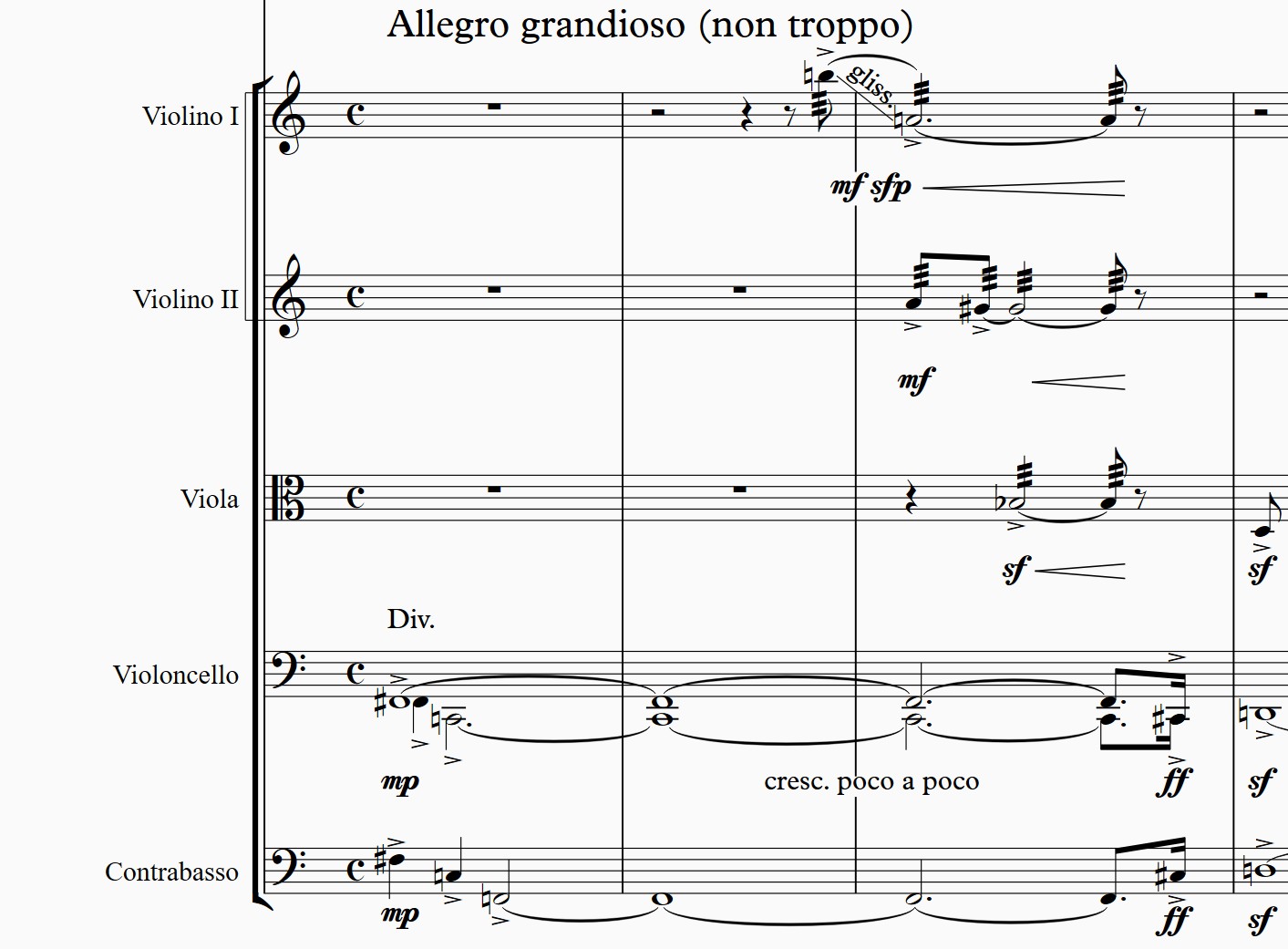
(Copyright © 2013 by Legend Art Ltd.)
A manuscript captures the musical idea, while professional music engraving prepares it for a successful performance. Rather than serving purely aesthetic purposes, engraving focuses on playability, clarity, and readability. These qualities directly support efficient rehearsal processes and reliable interpretation by performers.
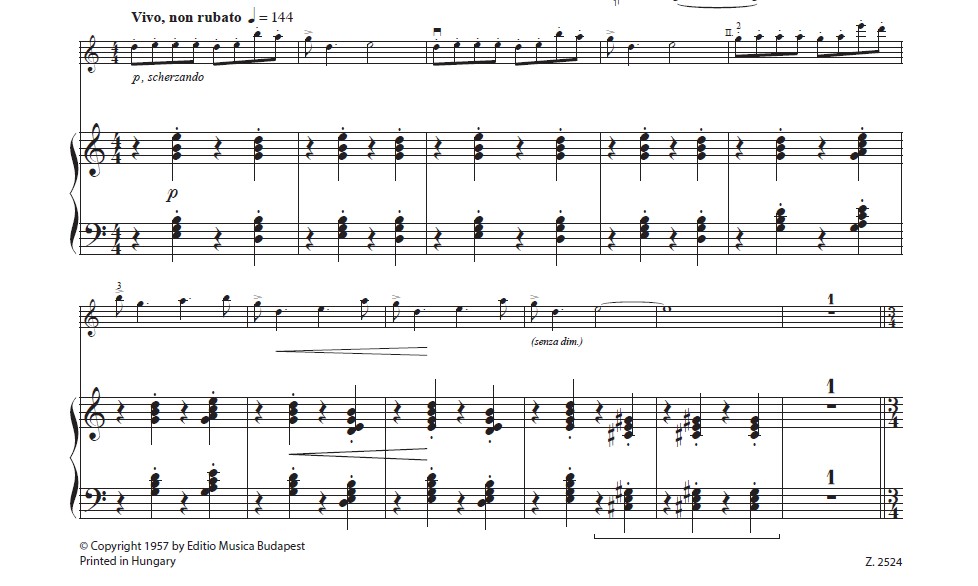
(© Copyright 1957 by Editio Musica Budapest)
Publishing Experience
In my music engraving work, I regularly operate in accordance with professional publishing standards, including the preparation of print-ready full scores and instrumental parts. Such projects have been completed for, or are currently in progress with, the following music publishers:
- Baton Music (NL)
- Bisel Classic (CH)
- de Haske – Hal Leonard (NL)
- Editio Musica Budapest Zeneműkiadó Kft. (HU)
- Gramofon Kiadó (HU)
- Kottamester Bt. (HU)
- Musidesk Rijnbrink (NL)
- Nap Kiadó Kft. (HU)
- Notengrafik Berlin (D)
- RMJ Classics (NL)
- Universal Music Publishing Editio Musica Budapest (HU)
- University of Music Vienna (A)
In many cases, my work involves direct collaboration with composers, covering the full process—or selected stages—from manuscript to print-ready score. These collaborations go beyond technical execution, involving shared decision-making on notation, graphical solutions, and performer-oriented readability.
Working with Composers
In recent years, I have collaborated with composers including Sándor Szokolay, Attila Gallai, Kálmán Dobos, Tímea Dragony, János Gyulai Gál, Máté Balogh, András Virág, and László Király.
These collaborations have provided particularly valuable experience in aligning contemporary musical thinking with individual notational requirements and tailored music engraving solutions.
The publishers listed are presented for reference purposes only.
The score excerpts shown do not constitute published editions and are displayed solely for professional demonstration purposes.